When fever, body ache, and headache hit during the monsoon season, dengue is one of the first things doctors rule out. This guide explains which dengue test to take and when, how to read NS1, IgM, and IgG results, what your platelet count means, and which warning signs need urgent care.
What Is a Dengue Test? (Meaning)
A dengue test is a blood test that checks for infection with the dengue virus, which spreads through the bite of infected Aedes mosquitoes. Dengue is a virus name, not an abbreviation, so there is no 'full form'. The test looks either for the virus itself (NS1 antigen or PCR) or for the antibodies your body makes against it (IgM and IgG).
What Tests Are Done for Dengue?
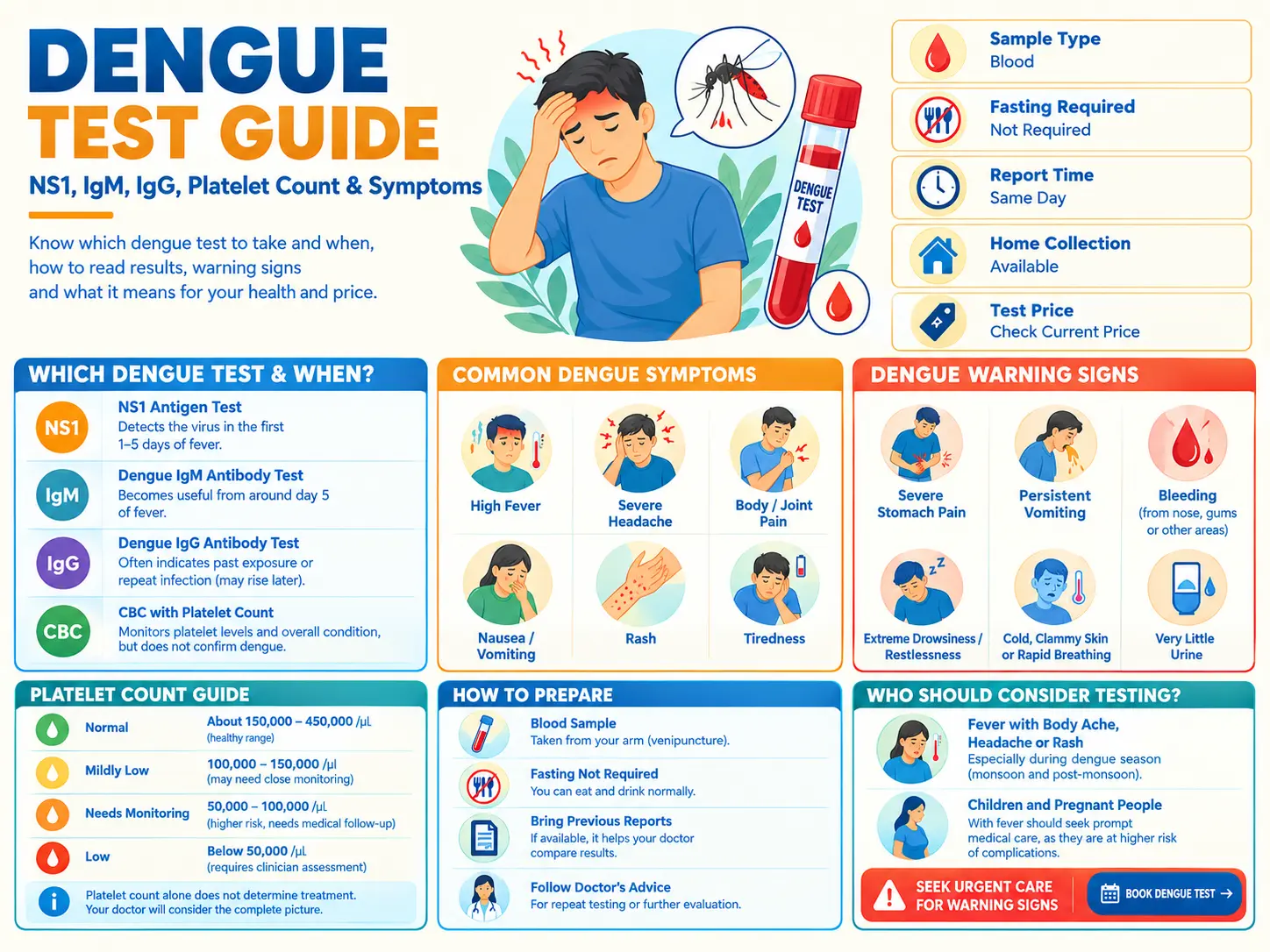
- NS1 antigen test — detects a viral protein in the first days of fever
- Dengue IgM antibody test — shows a recent infection
- Dengue IgG antibody test — shows past exposure, or a repeat infection when IgM is also positive
- Dengue PCR — detects the virus's genetic material; more specific, mainly lab-based and used in selected cases
- CBC with platelet count and hematocrit — not a confirmation, but used to monitor how the illness is progressing
What Are NS1, IgM, and IgG in a Dengue Test?
NS1 is a protein the dengue virus produces, so finding it means the virus is active in your blood right now. IgM is the first antibody your immune system makes and usually appears after about 4-5 days of illness. IgG is a longer-lasting antibody that appears later and can stay for life, which is why IgG alone usually points to an old infection.
Which Dengue Test Is Best, and After How Many Days of Fever?
- Day 1-5 of fever: NS1 antigen is the most useful (PCR if available)
- From about day 5 onwards: IgM antibody becomes more useful
- Later or in repeat infection: IgG rises, often quickly
- A rapid combo test (NS1 + IgM + IgG) covers all of these in one sitting
So NS1 versus IgM is mostly about timing, not which is 'better'. Don't wait for a particular day — if fever has lasted more than 2 days with body ache, headache, or rash during dengue season, get tested and let your doctor decide whether to repeat it.
How to Read a Dengue Test Report
- NS1 positive: current dengue infection, usually in the first 5 days
- NS1 positive, IgM and IgG negative: very early infection — antibodies haven't formed yet, still a positive result
- IgM positive: recent infection
- IgG positive only: past infection, not a current one
- IgM and IgG both positive: recent infection, possibly a repeat (secondary) one
- All negative: no dengue markers found at that time
What Does a Negative or Normal Dengue Report Mean?
A normal report means none of the markers were detected in your sample. It does not always rule dengue out: antibodies take days to appear and NS1 fades after about day 5, so a test done at the wrong time can miss it. If your fever and symptoms continue, your doctor may repeat the test after a day or two.
Can a CBC Confirm Dengue? Can It Be Normal in Dengue?
A CBC cannot confirm dengue. It often shows low platelets, low white blood cells, and a rising hematocrit, which fit dengue but also fit other viral fevers. In the first 2-3 days a CBC can still be completely normal, which is why doctors repeat it as the illness goes on.
Platelet Count in Dengue: Normal Range and Danger Zone
A normal platelet count is about 150,000-450,000 per µL (1.5-4.5 lakh). Many reports show it in lakhs, so 1.2 lakh means 120,000. In dengue, platelets usually start falling around day 3-4 and reach their lowest point around day 4-7, then recover as the fever settles.
- 150,000 and above (1.5 lakh+): normal — 200,000 is normal, though a later drop is still possible in early dengue
- 100,000-150,000: mildly low (so 120,000 is low, but usually not worrying by itself)
- 50,000-100,000: moderately low — 80,000 or 90,000 is not normal but is common in dengue and is monitored with repeat tests
- 20,000-50,000: low — 30,000 or 60,000 needs close monitoring by a doctor, especially with warning signs
- Below 20,000: very low — high bleeding risk, usually needs hospital care
The number alone does not decide treatment. Doctors weigh it with symptoms, hematocrit, bleeding, and how you look clinically, and platelet transfusion is generally reserved for bleeding or very low counts. Never self-manage a falling count at home.
Do Platelets Go Back to Normal After Dengue?
In most people, yes. Platelets start rising once the critical phase passes and typically return to normal within about 1-2 weeks of recovery. If your count stays low well after the illness, see your doctor to look for another cause.
What Is Hematocrit in Dengue?
Hematocrit is the share of your blood made up of red cells. In dengue, plasma can leak out of blood vessels, making the blood more concentrated, so a rising hematocrit along with a falling platelet count is a warning that the illness may be entering the critical phase.
Dengue Fever Symptoms (and Early Symptoms)
- Sudden high fever, often 102-105°F (a fever of 103°F is common in dengue)
- Severe headache and pain behind the eyes
- Muscle, bone, and joint pain (dengue is sometimes called 'breakbone fever')
- Nausea and vomiting
- Skin rash, often appearing as fever settles
- Mild bleeding such as bleeding gums or nosebleeds
- Extreme tiredness and loss of appetite
Symptoms usually begin 4-10 days after the mosquito bite (the incubation period) and the fever lasts about 2-7 days. Children may show fewer clear symptoms, so fever with irritability, refusal to feed, or drowsiness deserves a check-up.
Dengue Fever Stages (Stage 1 and the Critical Phase)
- Febrile phase (stage 1, days 1-3 or so): high fever, body ache, headache, rash
- Critical phase (around days 3-7, often when the fever falls): plasma leakage and sharply falling platelets — the riskiest period
- Recovery phase (following days): fluids are reabsorbed, appetite and energy return, platelets rise
A drop in fever does not always mean you are better — it can be the start of the critical phase, which is why monitoring continues for a day or two after the fever settles.
7 Warning Signs of Dengue: When to Go to Hospital
- Severe or constant stomach pain
- Repeated or persistent vomiting
- Bleeding from the gums or nose, blood in vomit, or black stools
- Extreme drowsiness, restlessness, or irritability
- Cold, clammy skin or rapid breathing
- Swelling or fluid build-up in the abdomen or around the lungs
- Very little urine, or a sudden drop in fever with worsening symptoms
Any of these needs immediate medical attention.
Dengue vs Malaria vs Typhoid vs Viral Fever
- Dengue: sudden high fever, severe body ache, headache, rash, falling platelets
- Malaria: fever with chills and shaking that may come in cycles
- Typhoid: fever that rises gradually over days, with stomach upset and weakness
- Common viral fever: milder, usually with cough and cold and a short course
They can look similar early on, and more than one can occur together, so doctors rely on tests such as dengue NS1/IgM, malaria antigen, and Typhidot rather than symptoms alone.
Dengue Treatment and What to Eat
There is no specific antiviral for dengue. Treatment is supportive: rest, plenty of fluids such as ORS, soups, coconut water, and fresh juices, and paracetamol for fever as your doctor advises. Avoid aspirin and ibuprofen-type painkillers, which can raise bleeding risk. Your doctor will track platelets and hematocrit and admit you if warning signs appear.
Foods to Increase Platelets and Papaya Leaf Juice
No food raises platelets on its own, but a balanced diet with fruit, vegetables, pulses, and fluids supports recovery. Papaya leaf juice is popular and some small studies suggest it may help platelets recover, but the evidence is limited and it is not a treatment — never use it to delay testing or hospital care.
Dengue Mosquito, Season, and Prevention
Dengue is spread by Aedes mosquitoes, which have striped legs, bite mainly in the daytime, and breed in clean standing water in coolers, buckets, flower pots, old tyres, and water tanks. In India, cases rise with the monsoon and peak from roughly September to November. Prevent it by emptying standing water at least weekly, covering water containers, using repellents, wearing full sleeves, and fitting window screens or nets.
Dengue Test for Children and in Pregnancy
Children with fever in dengue season should be tested and watched closely, as they can worsen quickly in the critical phase. Pregnant women with fever should seek care promptly, because dengue in pregnancy can carry higher risk and needs closer monitoring by the treating doctor.
Is Fasting Required? How Is the Dengue Test Done?
No fasting or special preparation is needed. A small blood sample is drawn from a vein in your arm, and the test is run on rapid cards or ELISA at the lab. Rapid results are available within hours and reports are usually ready the same day or within 24 hours.
Dengue Test Price and Report Time
Our dengue test is priced at 600, with same-day reports and free home sample collection available. A CBC and platelet count are separate tests that doctors commonly add to monitor the illness.
Dengue Test Services & Pricing
Explore dengue test details, pricing, and convenient home sample collection services.
Dengue Test in Panchkula, Chandigarh & Nearby Areas
Shyam Budget Friendly Labs provides accurate dengue testing with convenient home blood sample collection for patients across Panchkula, Chandigarh, Mohali, Zirakpur, Sector 21 Panchkula, Karimpur, Pinjore, and Kalka.
Dengue Test — Areas We Serve
We provide dengue testing with home sample collection across the following locations.
Key Takeaways
- NS1 works best in the first 5 days of fever; IgM becomes useful after about day 5; IgG alone usually means past infection
- NS1 positive with negative IgM and IgG is still a positive result — it means very early infection
- A CBC cannot confirm dengue, and it can be normal early on, but platelets and hematocrit are key for monitoring
- Platelets typically bottom out around day 4-7 and recover afterward; the number alone doesn't decide treatment
- Persistent vomiting, severe stomach pain, bleeding, or drowsiness need immediate hospital care
References
- Dengue and Severe Dengue — World Health Organization
- About Dengue — CDC
- Dengue — MedlinePlus
Common Questions
Find answers to the most commonly asked questions about this health topic.
It is a blood test that looks for the dengue virus (NS1 antigen) or your antibodies against it (IgM and IgG). A CBC with platelet count is commonly added to monitor the illness.
Book Dengue Test
Get accurate NS1, IgM and IgG dengue testing with doorstep sample collection and same-day reports.
Related Diagnostic Tests
These lab tests are closely related to this topic. Book with home sample collection for fast, accurate reports.
Related Health Packages
Based on this article, these preventive health packages may help you better understand your health.
Vitamin D Test: Normal Range, Levels, Price & Symptoms
Vitamin D test explained: normal range in ng/mL, how to read your results, deficiency symptoms, foods and sunlight, supplements, and price.
Typhoid Test: Widal vs Typhidot, Normal Range & Price
Typhoid test explained: Widal vs Typhidot, how to read titre and IgM IgG results, symptoms, stages, diet, treatment, and price.