Tiredness, aching bones, and general weakness are among the most common reasons people ask for a vitamin D test — and low vitamin D is very common in India despite the sunshine. This guide explains what the test measures, the normal range, how to read your number, what causes deficiency, and what helps.
What Is a Vitamin D Test? (Meaning and Name)
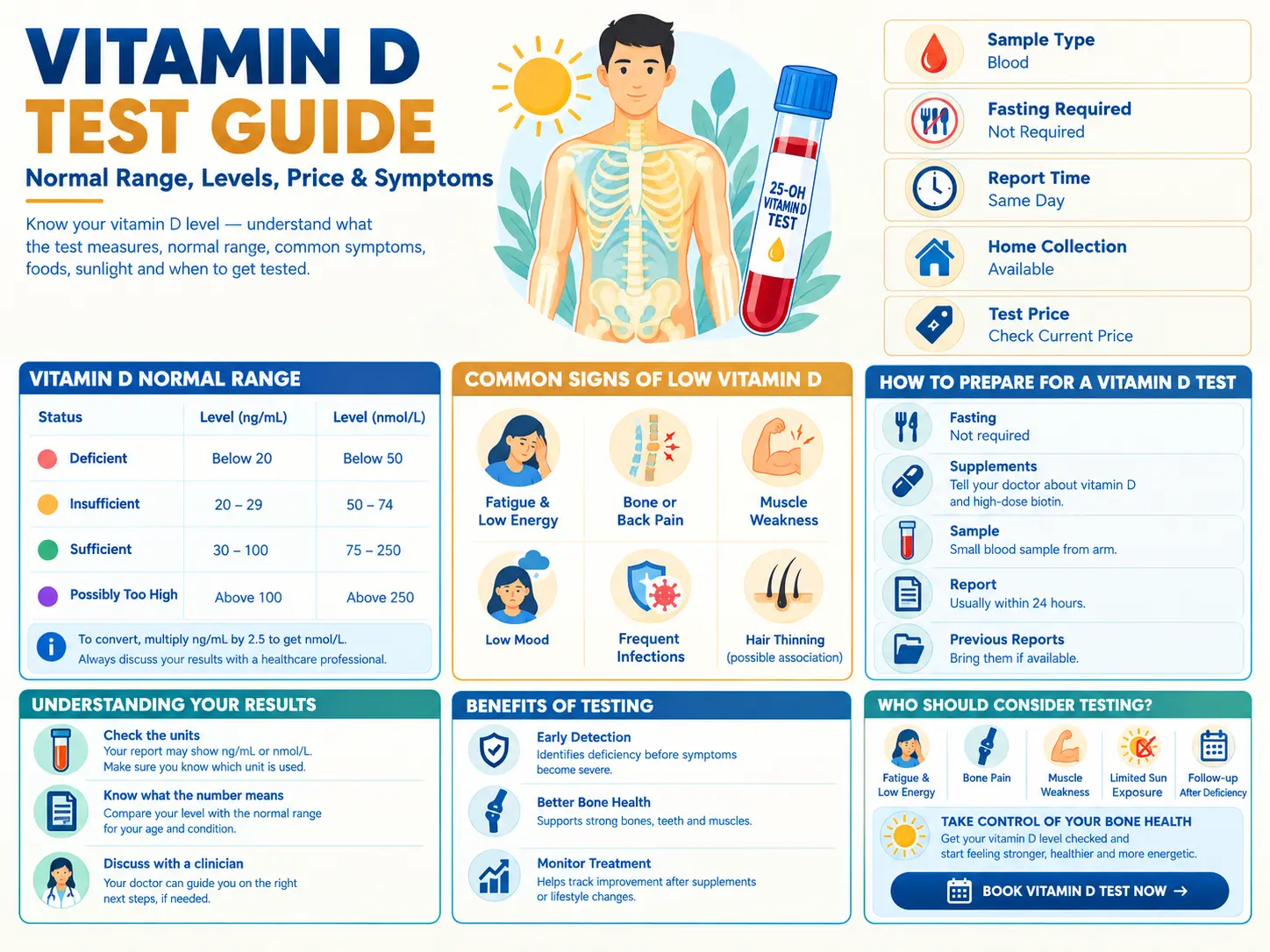
A vitamin D test measures how much vitamin D is in your blood. The test is called the 25-hydroxy vitamin D test (25-OH vitamin D), and reports often label it 'Vitamin D Total' or 'Vitamin D3'. Your body converts vitamin D from sun, food, and supplements into 25-hydroxy vitamin D, which is the form that best reflects your overall status. Vitamin D does not have an abbreviation-style 'full form' — the name is simply the vitamin it tests.
Vitamin D Test vs Vitamin D3 Test: Are They the Same?
In most labs, yes. Both usually refer to the 25-hydroxy vitamin D blood test. Some reports show 'Total (D2 + D3)' and others show D3 only, which is why it helps to check which one your report lists if you are comparing results between labs.
Why Is the Vitamin D Test Done?
- Persistent tiredness, body ache, or muscle weakness
- Bone pain, back pain, or frequent fractures
- Limited sun exposure due to indoor work or covering clothing
- Checking after a deficiency diagnosis, to see whether treatment is working
- Conditions that affect absorption, such as celiac disease, or kidney and liver disease
- Children with growth problems or signs of rickets
- Routine preventive screening alongside vitamin B12
Vitamin D Normal Range (ng/mL and nmol/L)
- Deficient: below 20 ng/mL (below 50 nmol/L)
- Insufficient: 20-29 ng/mL (50-74 nmol/L)
- Sufficient: 30-100 ng/mL (75-250 nmol/L)
- Possibly too high: above 100 ng/mL (above 250 nmol/L)
To convert, multiply ng/mL by 2.5 to get nmol/L. Some labs use slightly different cut-offs, and many label a level below 10 ng/mL as severe deficiency, so always compare with the range printed on your own report. The ranges are the same for men and women.
How to Read Your Vitamin D Test Result
First check the unit. A value of 44 means a healthy level if it is in ng/mL (inside 30-100), but would be low if it is in nmol/L. Then compare it with the bands above: 6 or 8 ng/mL is severely low and needs treatment under a doctor, 15 is deficient, 25 is insufficient, and 40 is sufficient. Your doctor also considers your symptoms, calcium, and other factors, not the number alone.
Symptoms of Low Vitamin D (in Men and Women)
- Fatigue and low energy
- Bone pain or lower back pain
- Muscle weakness, aches, or cramps
- Getting sick more often
- Low mood
- Slow healing of wounds
- Hair thinning (a possible association, not a proven sole cause)
Mild deficiency often causes no symptoms at all, and these signs can have many other causes, so only a blood test can confirm low vitamin D. Symptoms are generally similar in men and women, though women, especially after menopause, are more prone to bone loss.
Does Vitamin D Deficiency Cause Hair Fall, Fatigue, or Body Pain?
Fatigue, muscle weakness, and bone or body pain are well-recognised effects of significant vitamin D deficiency. Hair fall is less clear: low vitamin D is linked with some types of hair loss, but hair fall usually has several causes, including iron, thyroid, stress, and hormones, so correcting vitamin D alone may not stop it. That is why doctors often test vitamin D, B12, thyroid, and iron together.
What Causes Vitamin D Deficiency?
- Too little sun exposure — indoor work, covering clothing, or heavy sunscreen use
- Darker skin, which makes less vitamin D from the same sunlight
- A diet low in vitamin D, especially for vegetarians without fortified foods
- Air pollution and living in high-rise or shaded homes
- Overweight or obesity
- Older age
- Malabsorption conditions such as celiac disease or inflammatory bowel disease
- Kidney or liver disease, and some long-term medicines
Vitamin D Deficiency Treatment
Treatment depends on how low your level is. Doctors commonly prescribe a course of vitamin D3, often a weekly high-dose sachet or capsule for several weeks followed by a smaller maintenance dose, and recheck the level after about 3 months. The dose should come from your doctor, because taking very high doses without guidance can push vitamin D and calcium too high.
Vitamin D Rich Foods (Including for Vegetarians)
Few foods are naturally rich in vitamin D. Good sources include fatty fish such as salmon, sardines, and mackerel, egg yolk, and cod liver oil. For vegetarians, options include fortified milk, fortified curd, fortified cereals and oils, and mushrooms exposed to UV light. Because food alone rarely corrects a real deficiency, sunlight and doctor-advised supplements usually do most of the work.
How Much Sunlight Do You Need for Vitamin D?
A common guide is about 15-30 minutes of midday sun on bare arms and legs a few times a week, but the right amount depends on your skin tone, season, location, and how much skin is exposed. Sunscreen, window glass, and pollution reduce production. Longer exposure is not a safe way to catch up, because of sunburn and skin-cancer risk.
What Is the Best Time to Take Vitamin D?
Vitamin D is fat-soluble, so it is absorbed better when taken with a meal that contains some fat. The time of day matters far less than taking it consistently as your doctor prescribed.
High Vitamin D: Symptoms and Toxicity
Too much vitamin D, almost always from over-using supplements and not from sun or food, can raise blood calcium. Signs include nausea, vomiting, weakness, excessive thirst and urination, confusion, and kidney stones. This is why self-prescribing high-dose tablets without a test is not advisable.
Is Fasting Required for a Vitamin D Test?
No. You can eat and drink normally and have the test at any time of day. Tell the lab if you take vitamin D supplements or high-dose biotin (often in hair and nail products), since biotin can interfere with some assays.
How Is the Vitamin D Test Done?
A small blood sample is drawn from a vein in your arm, which takes only a couple of minutes. The serum is analysed on an automated analyser and the report is usually ready within 24 hours.
How Often Should You Test Vitamin D?
If you are being treated for deficiency, doctors commonly recheck after about 3 months. Without a known problem, people at higher risk often test once a year. There is no need to test more often unless your doctor asks.
Vitamin D Test in Pregnancy and for Children
In pregnancy, doctors may check vitamin D if you have risk factors or symptoms, and often advise supplements as part of routine care. In children, the test is used when there are signs such as bone pain, delayed growth, or rickets. Dosing in both groups should always be set by the doctor.
Vitamin D, Calcium, and Vitamin B12: How Are They Related?
Vitamin D helps your body absorb calcium, so doctors often check calcium (and sometimes ALP) alongside it when bone health is a concern. Vitamin B12 is a separate nutrient with a different job, but both are commonly low in people eating mostly vegetarian diets and both can cause fatigue, which is why they are often tested together.
Does a CBC Test for Vitamin D?
No. A CBC counts blood cells and hemoglobin. It cannot show vitamin D, which needs its own 25-OH vitamin D test.
Vitamin D Test Price and Why It Costs More Than Basic Tests
The vitamin D test uses specialised analyser reagents and is run in smaller volumes than routine tests, so it costs more than a blood sugar or CBC test everywhere. Our vitamin D test is priced at 450, with same-day reports and free home sample collection available.
Vitamin D Test Services & Pricing
Explore vitamin D test details, pricing, and convenient home sample collection services.
Vitamin D Test in Panchkula, Chandigarh & Nearby Areas
Shyam Budget Friendly Labs provides accurate vitamin D testing with convenient home blood sample collection for patients across Panchkula, Chandigarh, Mohali, Zirakpur, Sector 21 Panchkula, Karimpur, Pinjore, and Kalka.
Vitamin D Test — Areas We Serve
We provide vitamin D testing with home sample collection across the following locations.
Key Takeaways
- The vitamin D test measures 25-hydroxy vitamin D; 'Vitamin D Total' and 'Vitamin D3' on reports usually mean the same test
- In ng/mL: below 20 is deficient, 20-29 insufficient, 30-100 sufficient; check the unit before judging a number
- Fasting is not required and the test can be done at any time of day
- Low vitamin D is very common in India and often has no symptoms, so only a blood test confirms it
- Supplement doses should come from your doctor — too much vitamin D can be harmful
References
- Vitamin D Test — MedlinePlus
- Vitamin D: Fact Sheet for Health Professionals — NIH Office of Dietary Supplements
- Vitamin D Deficiency — Cleveland Clinic
Common Questions
Find answers to the most commonly asked questions about this health topic.
It is called the 25-hydroxy vitamin D test (25-OH vitamin D), often listed on reports as 'Vitamin D Total' or 'Vitamin D3'.
Book Vitamin D Test
Get an accurate 25-OH vitamin D test with doorstep sample collection and same-day reports.
Related Diagnostic Tests
These lab tests are closely related to this topic. Book with home sample collection for fast, accurate reports.
Related Health Packages
Based on this article, these preventive health packages may help you better understand your health.
LFT Test: Full Form, Normal Range, SGOT SGPT & Price
LFT test full form, how to read your report, SGOT and SGPT normal range, causes of high liver enzymes, fatty liver, fasting rules, and price.
Dengue Test: NS1, IgM, IgG, Platelet Count & Symptoms
Dengue test explained: which test to take and when, how to read NS1, IgM and IgG results, platelet count in dengue, warning signs, and price.